
From 45s to the Cloud: What I Lost Along the Way
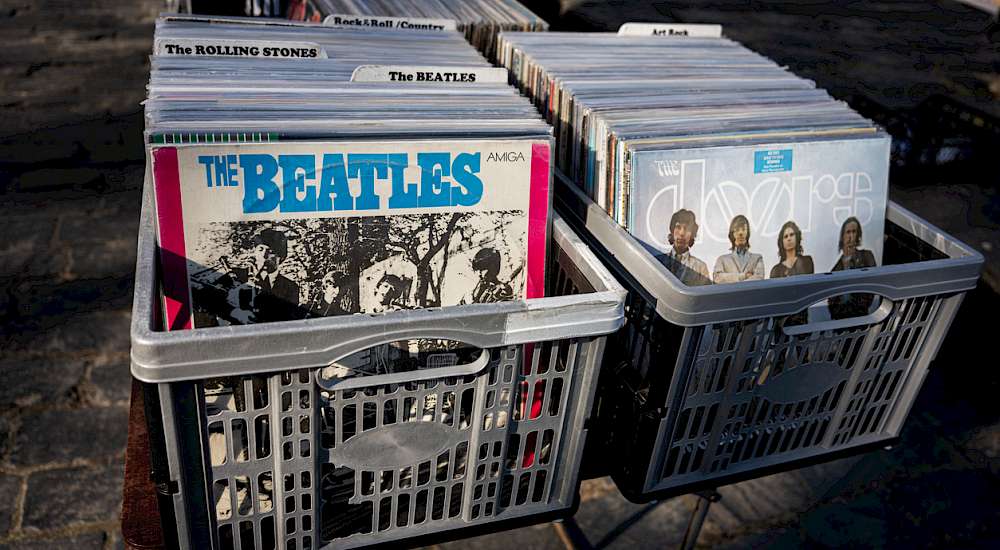
A quick note before we dive in: this isn't the food trends column you're used to getting from me. I was watching a movie about 70s music the other night, and it pulled me back somewhere I hadn't been in a while. Once the memories started, I couldn't stop them, so instead of fighting it I decided to just write it down and share it with you.
We'll get back to grocery aisles and supply chains I promise. But every once in a while, a story finds you instead of the other way around, and this was one of those times.
I still remember the exact weight of a 45 in my hand. That little plastic donut with the oversized hole, spinning at a dizzying 45 RPM, promising two and a half minutes of everything that mattered that week.
Where It Started: The 45
I was a kid running around with a stack of singles long before I thought about running a business. The 45 was pure impulse. You saved your allowance, biked to the record shop, walked out with one song, maybe two if you counted the B-side nobody ever played. No algorithm was telling me what I'd like next. There was a guy behind the counter who knew music, and he'd hand you something because he figured you'd dig it. That's a relationship. It's not a recommendation engine, and honestly I think about that difference more than you'd guess when I'm writing about retail today.
Then Came the 33⅓
The album changed everything, not just the math. A 33 wasn't a song, it was a statement. A full side, sequenced on purpose, meant to be played front to back with the sleeve sitting in your lap so you could read the liner notes while side one spun out.
My very first LP was actually a mistake. I grabbed something called The Beats off the shelf because I was a kid and I was sure I was buying the Beatles. Turned out it was a cover band doing note-for-note versions of Beatles songs, and I didn't figure that out until it was already spinning on my turntable at home. Lesson learned early about reading labels carefully, something that's stuck with me my entire career.
But the record, and the artist, that actually got me is Frank Zappa and the Mothers of Invention. My first concert ever was Zappa at the Capitol Theatre in Passaic, New Jersey, and I walked out of there a different kid. That night rewired how I listened to everything after it. I spent more nights than I can count afterward on the floor of my room with a stack of LPs, working out why a producer buried the slow song fourth instead of third. Some of my sharpest early lessons about pacing and storytelling didn't come from a business book. They came from that.
The CD Felt Like the Future for About Ten Minutes
When CDs showed up, we all acted like vinyl was already a relic. No surface noise, no warping in a hot car, no flipping the record over halfway through dinner. I boxed up crates for the thrift store and felt modern, like I'd finally caught up to where things were headed. I'd recognize that same feeling decades later covering grocery retail. That rush to grab the shiny new format because it's more convenient, without really clocking what you're giving up to get there.
WKDU, and the Storage Unit I Never Should Have Cleared
Some of that vinyl wasn't just personal. It was professional. Back at Drexel I was a DJ at WKDU, the college radio station, and over the years I built a collection that ran well past a thousand LPs. Promo copies. Imports. Records you flat out could not find anywhere else. It's the kind of collection you build one late-night on-air shift at a time, and it's not the kind you can replace. Those crates followed me around for decades and eventually ended up in a Public Storage unit, because at some point I just ran out of anywhere else to put them.
Right before the pandemic hit, I finally cleared that unit out. Told myself it was overdue. Told myself I was being practical, that paying a monthly bill to store a thousand-plus LPs made no sense in a digital world. So I let them go. I've regretted it pretty much ever since. No streaming service on the planet is going to hand you back a promo copy somebody slipped you at a college radio station in the 1970s.
And Then, Almost Nothing at All
Digital didn't arrive with any ceremony. No unboxing, no drive to the store, no cover art to hold in your hands. One day the music was just there, in a device, then the cloud, then everywhere and nowhere at once. Impossibly convenient, sure. I can carry more music in my pocket right now than existed in my whole childhood collection combined. But I also gave away, sold, or flat-out tossed thousands of records and CDs along the way, because every new format convinced me the last one was already obsolete. Tons of plastic, literally, gone because I bought into the upgrade cycle every single time.
What I Actually Lost
Nobody tells you this part when you're trading formats for convenience: you're not just losing scratches and static, you're losing the object. A record has weight, a smell, a crackle before the first note that tells your brain something real is about to happen. Digital handed me access to everything and ownership of nothing. I don't have my music anymore, I subscribe to it. And if the service disappears one day, so does the whole collection. No crate to dig through. No proof any of it was ever mine.
That's really what stings about the collection specifically. Those weren't just records, they were a record of me. Who I was on-air, what I was discovering, what I chose to play for an audience before I ever imagined spending a career writing about what's happening in the aisles of a grocery store. I can stream almost every one of those songs today in about four seconds on my Alexa. What I can't get back is the actual copy, the one with my handwriting on the sleeve or the record label's stamp across the label. That's gone. Streaming doesn't even pretend to replace it.
I see this pattern everywhere now, honestly, in how we buy groceries, in how brands earn or lose loyalty, in how convenience keeps eating away at meaning one format at a time. The industry always sells you the upgrade. It never once warns you about the disposal.
My Bottom Line
I don't regret going digital. I'm not walking around with a Discman, and neither are you. But that storage unit still gets me. I had the chance to hold onto a piece of who I was, and right before the pandemic, I let it go because in the moment it seemed like the practical move. Convenience always wins in the short run. It's only years later, once you realize there's no undoing that kind of decision, that you understand what you actually gave up.

Copyright © 1994 - 2026 Phil Lempert / Consumer Insight, Inc.